Who, Me? I need a will?
Have you heard this? If you have one penny and two relatives, you need a will. So, using that rule of thumb, everyone needs a will. Right? Some wills are extremely brief documents detailing custodial responsibilities of minor children, some wills are incredibly detailed and therefore long documents detailing distribution of a person’s assets, down to the penny. In other words, there is no single will instrument that will work for everyone. But, I repeat, everyone does need a will.
A will is not the only document you and your spouse/partner/family should create. Who will decide whether or not to provide life-saving measures when you are in need? Do you know that you, yes YOU, can make your wishes known now? Along with a will, you should also consider medical directives or a living will. Now, while you are able and your family are not operating in crisis-mode, is the time to have some of those awkward conversations and at the minimum put some of those hard topics on the table.
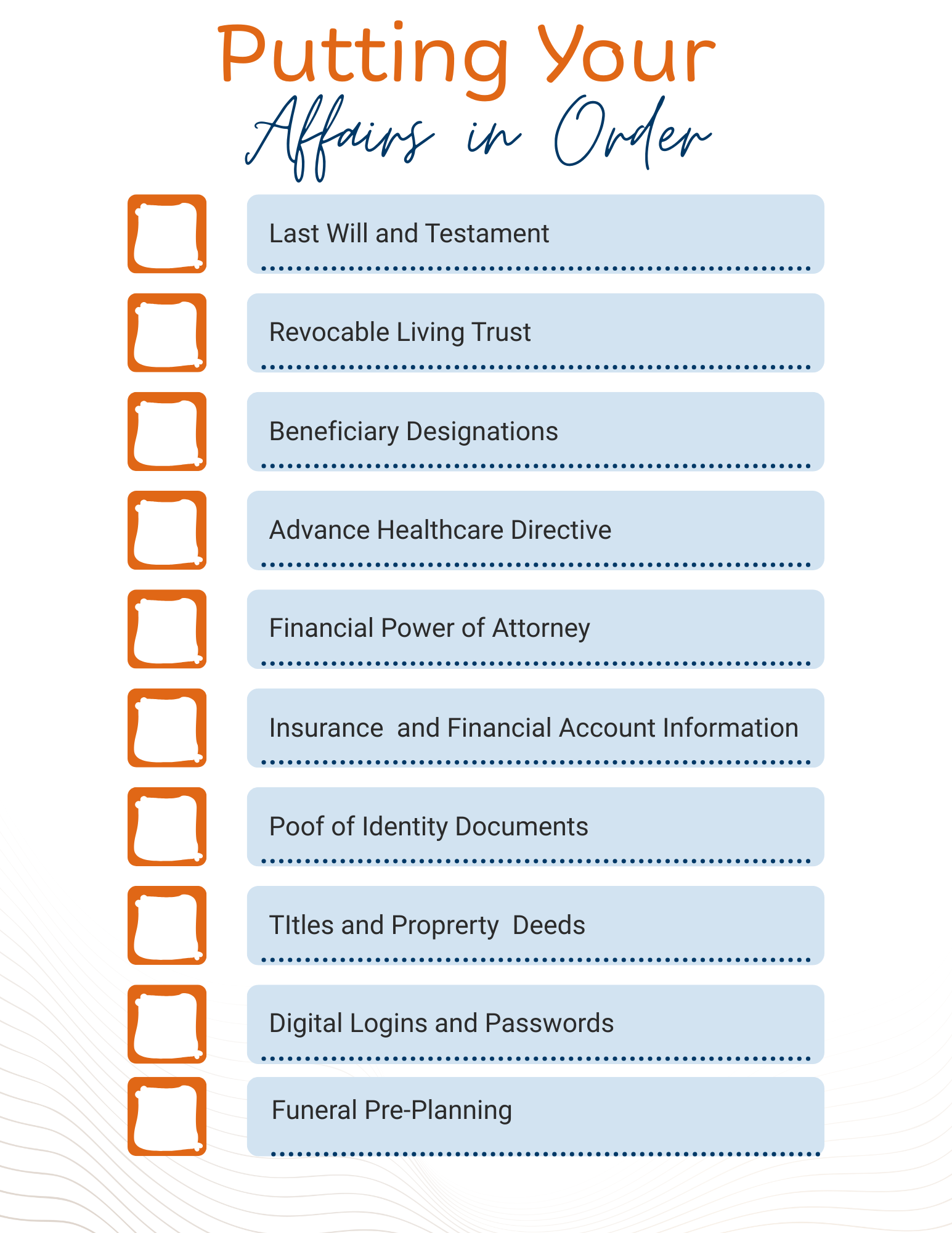
The PHUMC Foundation has a great resource you can use to start working on this project. And, remember, this is not a project for a long-weekend. Getting your affairs in order is more a mind-set in that you are actively considering the what-ifs of life in a calm and organized manner. The checklist to the right is a high-level listing of things to remember when you are planning your legacy. This brochure will give you more detail about each of the entries.
Of course, there are a plethora of ‘checklists’, ‘Top 10 things to consider when planning your legacy’, ’12 considerations of estate planning’. Any where you look, you can find an resource for this project. These 10 steps, items on a list, things to do – are our interpretation of what is needed for basic planning.
Once you have worked your way through this checklist, have all your estate planning documents in hand and store them in a safe, but easily accessible, location. Consider sharing the location information with your loved ones. Also, it is wise to share a copy of the documents with the people who may need them (e.g., your healthcare agent should receive a copy of your advanced healthcare directive).
Changes in lifestyles and expectations occur almost daily. Set a reminder to revisit these documents every three to five years unless you have a major life change such as a change in marital or family status, the death of a beneficiary or executor, significant changes in your financial status, relocation to a new state, changes in your health or the tax laws.
Disclaimer: Pulaski Heights UMC Foundation offers opportunities for estate
planning education. Estate planning needs differ based on personal circumstance and applicable State and Federal laws. This material is provided for informational purposes only and is not intended to provide, nor should it be construed as legal or tax
advice. This general information is not intended to serve as a basis for investment or tax-planning decisions.
Download the Estate Planning Brochurehere for additional information.